
Bathroom corners: grout or silicone
Wall-wall and wall-floor internal corners take an elastic joint. Cement grout cracks there; silicone does not replace the waterproofing band behind the tile.
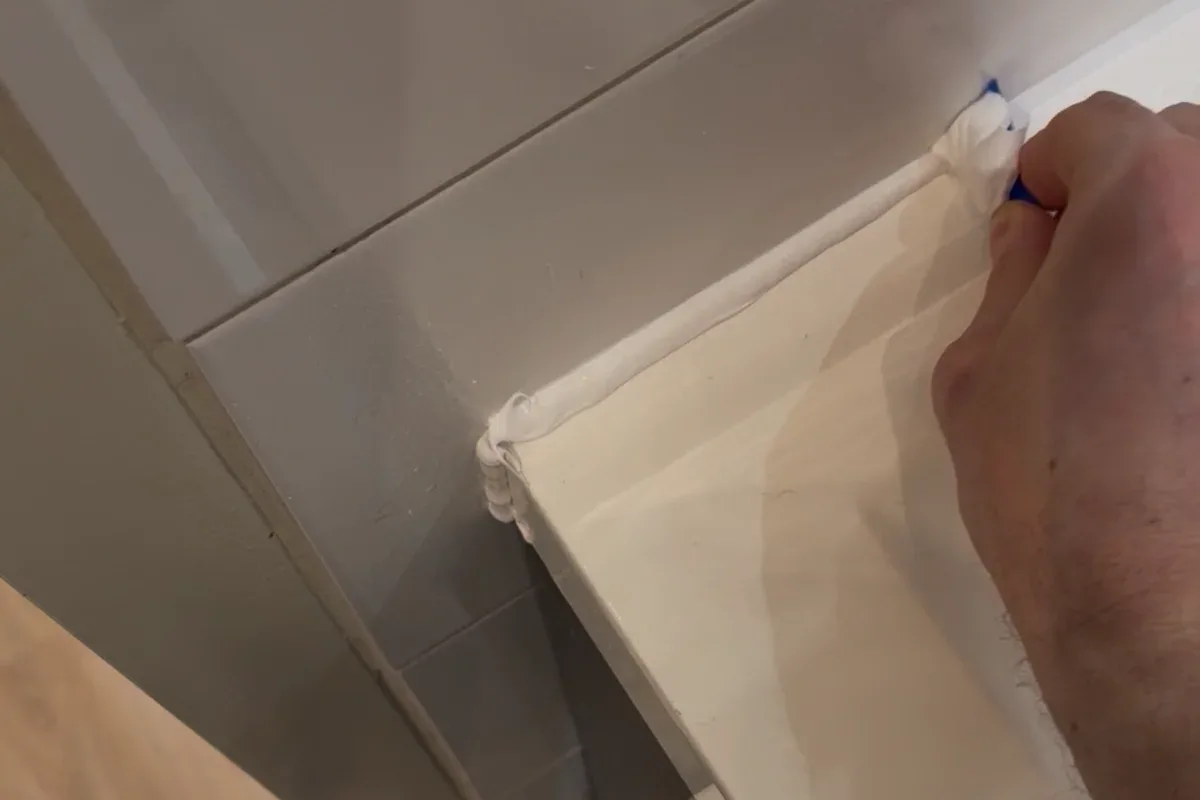
Internal corners: sanitary silicone. Flat joints in the same plane: grout. The silicone is the visible line; the built-in waterproofing sits behind the tile and is not improvised with a bead.
The corner rule
Where two walls meet, or wall meets floor, there is movement. Temperature, settlement, expansion: the corner works. Cement grout is rigid. It hairline-cracks, opens, and water gets in. That line takes silicone, at the end of the job, once tiling and grout have cured and the substrate is dry.
Between two tiles in the same plane, grout. If you are unsure whether a meeting can move, silicone. In the shower corner, silicone in front — and, on new work, a waterproofing band in the corner before the tiles go on.
Silicone is not the only barrier
An expensive mistake: thinking the bead is enough. The visible joint is the first line. The room should be watertight before the tile: band and slurry in the corners, behind. Silicone ages and sometimes peels without a show. Without the band, water goes into plasterboard or timber.
If the tiling is already on, you cannot always see that band. On a new strip-out, check it before the tiler closes.
Order on a renovation
Tile and grout the flat joints; leave corners clean, V or U, free of grout. Wait 24–48 hours for adhesive and cement to give up moisture. Silicone on damp will not grab: vapour pushes the bead off. Degrease. Sanitary silicone — OTTOSEAL S100 on ceramic — with body. Tool it flat or slightly proud so water leaves the corner, not a channel.
If tiles kiss on the arris, there is no mass. Leave about 5 mm. In wide corners, backer rod: two-sided adhesion. Stuck in the point as well (three faces), the rubber cannot stretch and fails early.
Mistakes
“Same bag of grout for the corner”: pretty for a week, then hairlines. Sealing while the corner is still dark with moisture. Over cracked grout: a thin skin that lets go. Rake the cement out first.
Exceptions
A flat meeting that does not move: grout. A corner that was grouted and has split: do not cap it; empty it and seal. Heavy sanitaryware: better to seal once it has settled, not with the tray still “in the air”.
What I use on this joint
-
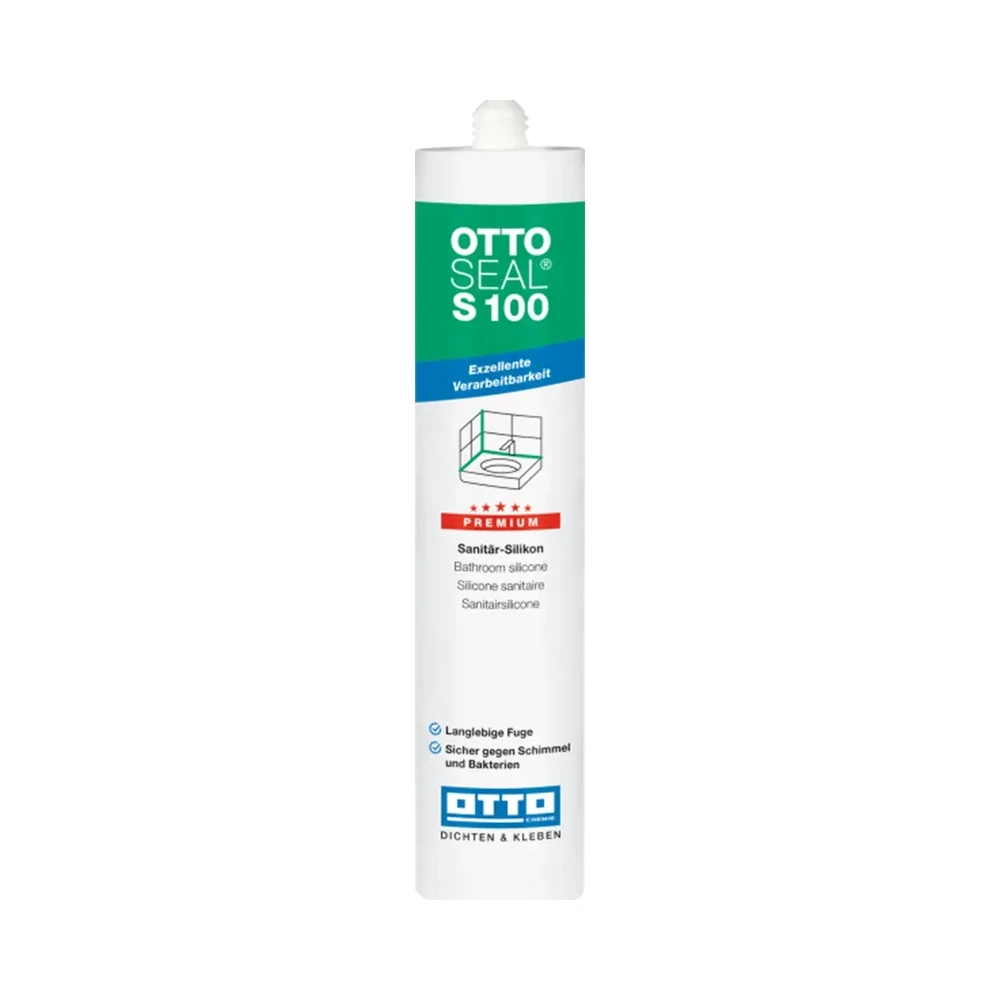
OTTOSEAL S100
The sanitary silicone I use on showers and baths. Elastic — not a staining-risk stone silicone.
OTTOSEAL S100 Purchase link not available -
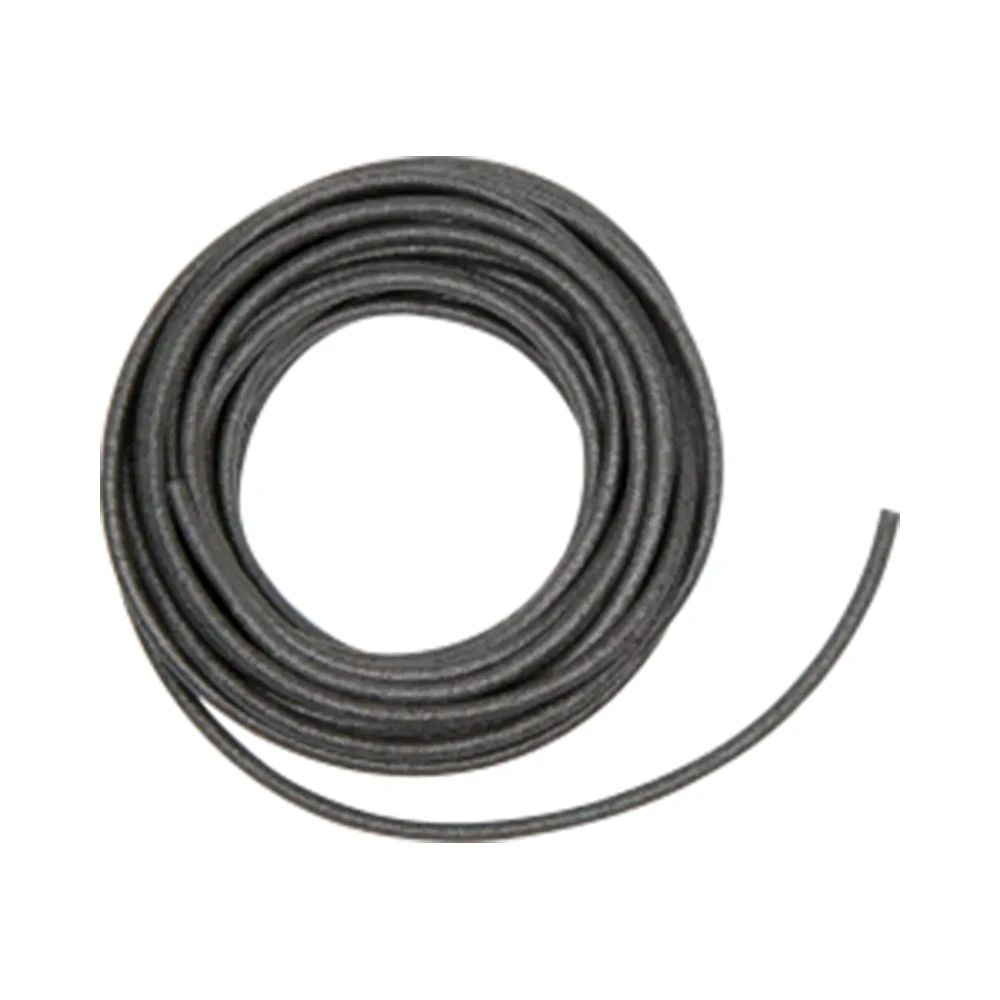
Backer rod
Closed-cell PE rod to control depth and prevent three-sided adhesion.
Backer rod Purchase link not available
-
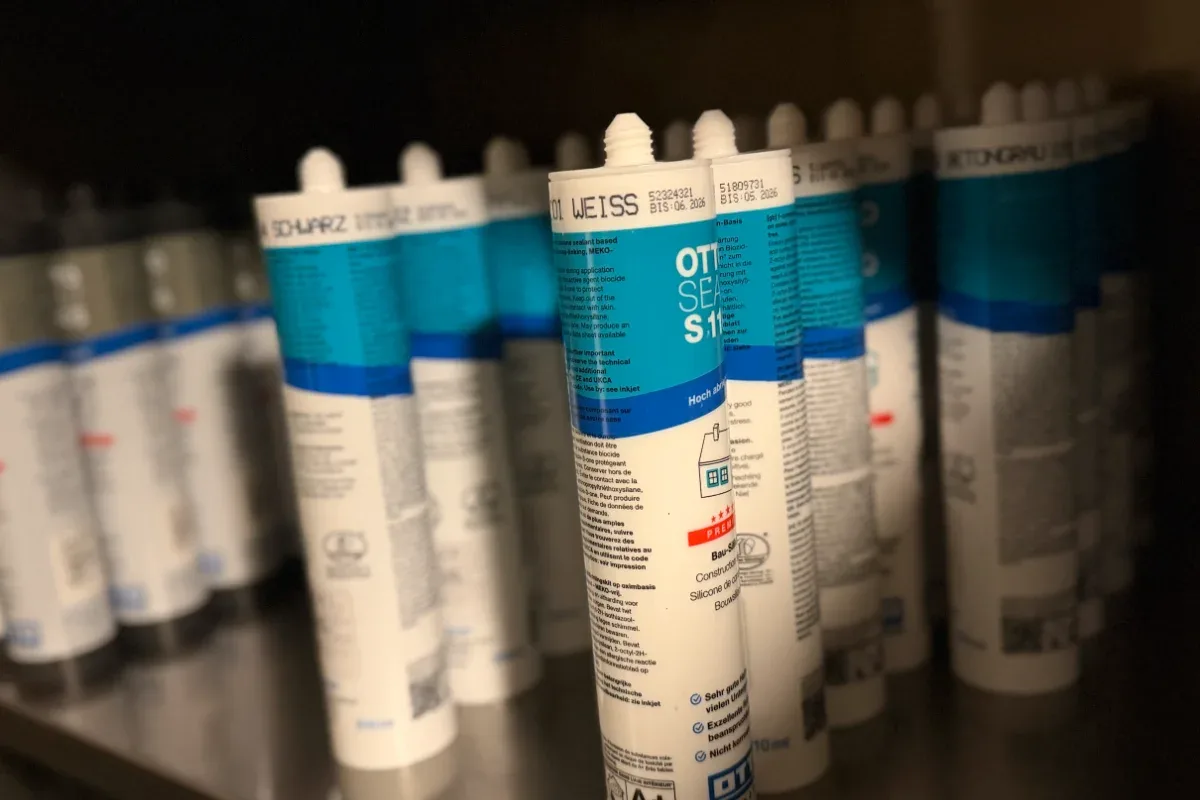
Which sealant to use in the bathroom (and which not to)
Wet zone: sanitary silicone. Paintable ceiling: acrylic sealant. Stone: stone chemistry. Hybrid is not a shower wild card.
-
Movement joints: when silicone instead of grout
Corners, material changes, large fields and underfloor heating. Cement grout will not give.
-
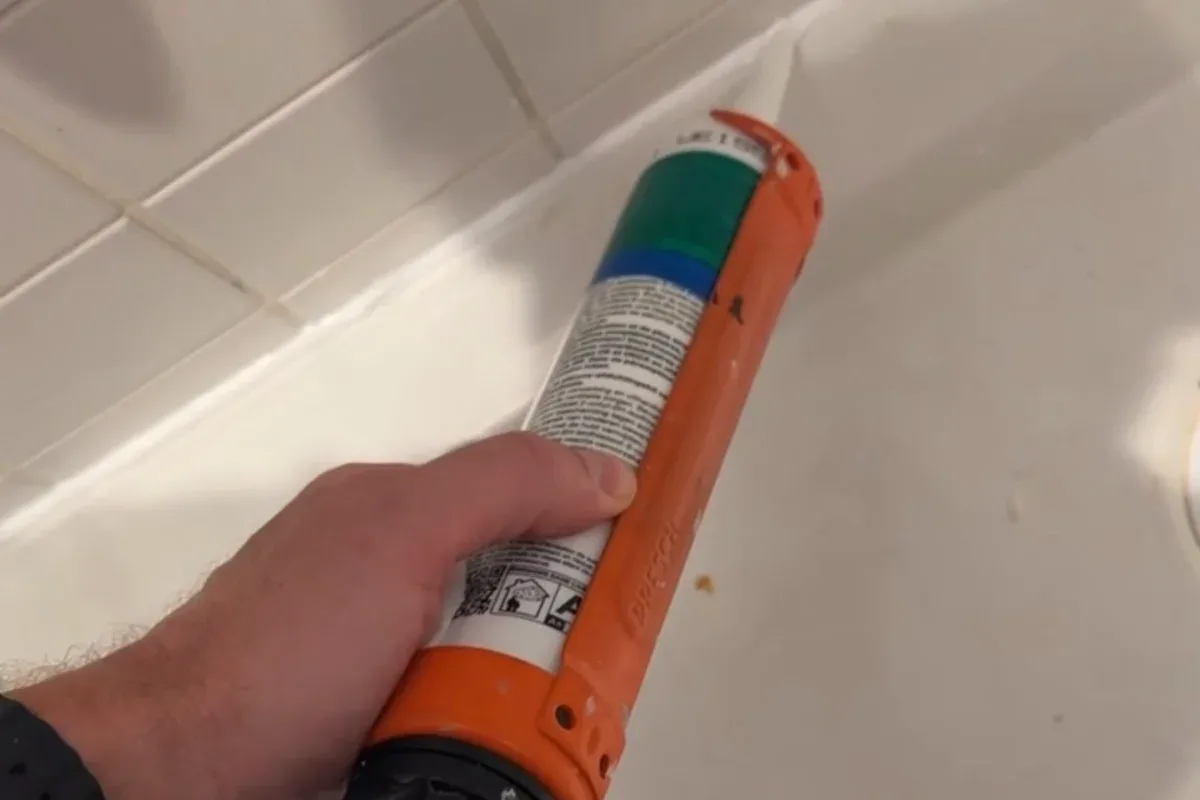
Three-sided adhesion: why a “full” joint tears
If the silicone bonds to both flanks and the back, it cannot stretch; backer rod or bond-breaker tape frees the third face.