
Acetoxy or neutral: the vinegar smell is not a fault
A vinegar smell marks an acetic cure: it grabs glazed ceramic well, and the acid bites stone and sensitive metal.

If it smells of vinegar, it is acetoxy-cure silicone: on glazed tile, enamel and glass it is often the right tool. On marble, granite, bare aluminium, copper, mirrors and many acrylic trays, choose a neutral system.
What the smell is telling you
That vinegar sting is not “cheap sealant” by definition. It is acetic acid coming off as the bead cures. In a ventilated bathroom it is a nuisance for a while; on metal and stone it can be a permanent problem.
Neutral silicone (often alkoxy or oxime) barely smells. It cures more slowly and, if the room does not ventilate early on, it can yellow a bit more. It is not “always better”. It is safer when the substrate will not take acid.
In a standard ceramic bathroom I often use OTTOSEAL S100. On stone, sensitive metal or a plastic tray, I switch to neutral: OTTOSEAL S110 or a natural-stone silicone such as S70, depending on the face.
When acetoxy is fine
Glazed ceramic tile, enamelled bath, glass. Smooth, non-porous faces where the acid has nothing to corrode or stain. Skin forms quickly: tool it without nodding off.
Do not shoot it “just in case” through the whole house. One-cartridge convenience is exactly how kitchen aluminium gets eaten.
When to go neutral — and when acid is forbidden
Neutral: natural stone, composite, acrylic trays and other plastics, aluminium profiles, copper, unprotected steel, mirrors (the acid attacks the silvering and leaves black edges).
Never acetoxy on marble, granite or other stain-prone stone. Acid and plasticisers walk into the edge and leave a greasy halo you will not wash out. On uncoated metal, corrosion under the bead: a year later the sealant lets go because the substrate is no longer the same.
How I choose on site
- Identify the substrate for real, not the “sanitary” colour on the cartridge.
- Get dust and grease off with a technical cleaner, not kitchen glass spray.
- On porous faces, a primer often lengthens the life of a neutral system. It is not the same bottle as the degreaser.
- Apply in a continuous bead. Acetoxy wants faster tooling.
- Tool with a neutral finisher, not washing-up liquid.
Ventilate if you use acetoxy. Your lungs are not a footnote.
Usual mistakes
Acetoxy sanitary silicone on a stone floor: the famous dark stripe beside the joint. No magic takes it out.
Acetoxy behind a mirror: black marks in the silvering.
Neutral over acetoxy leftovers, or the other way round: silicone does not bond to cured silicone. The old layer has to come out fully. Do not mix chemistries halfway along the same flank.
For an aluminium frame, neutral. The acid oxidises; then you blame “bad glue”.
What I use on this joint
-
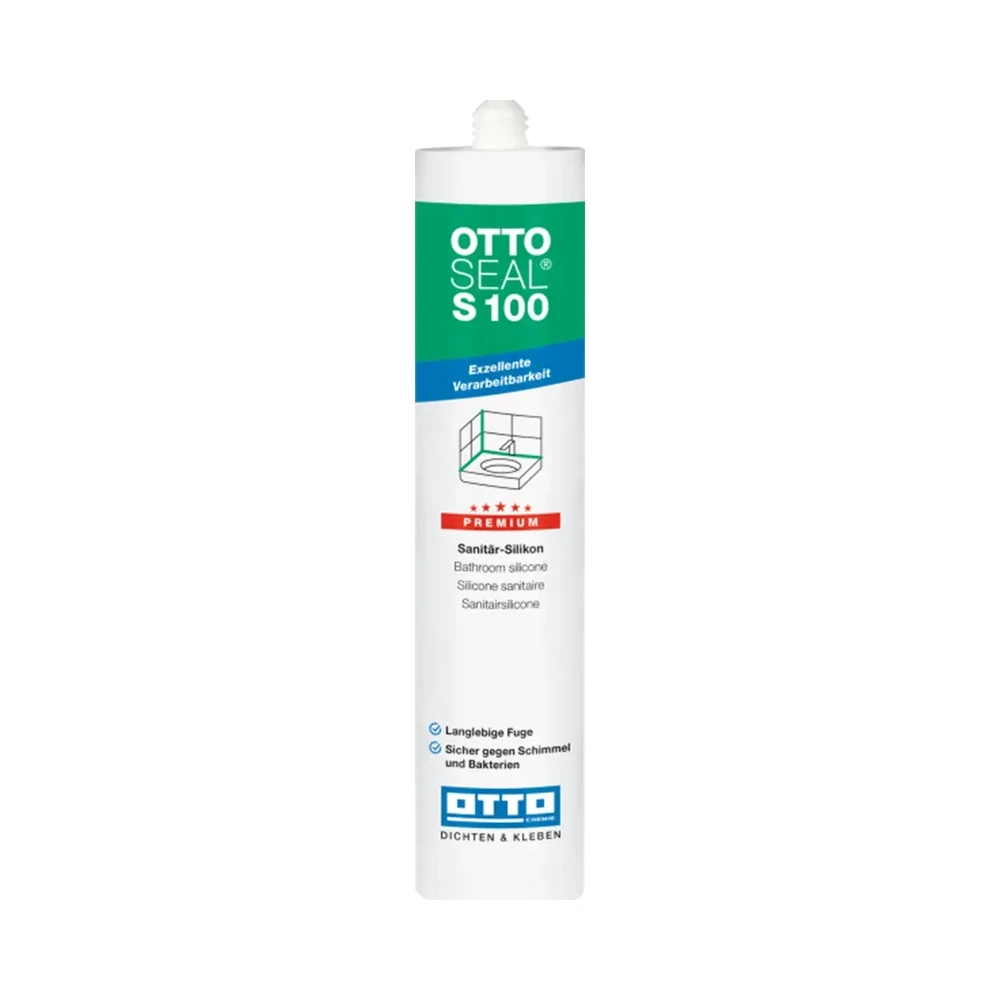
OTTOSEAL S100
The sanitary silicone I use on showers and baths. Elastic — not a staining-risk stone silicone.
OTTOSEAL S100 Purchase link not available -
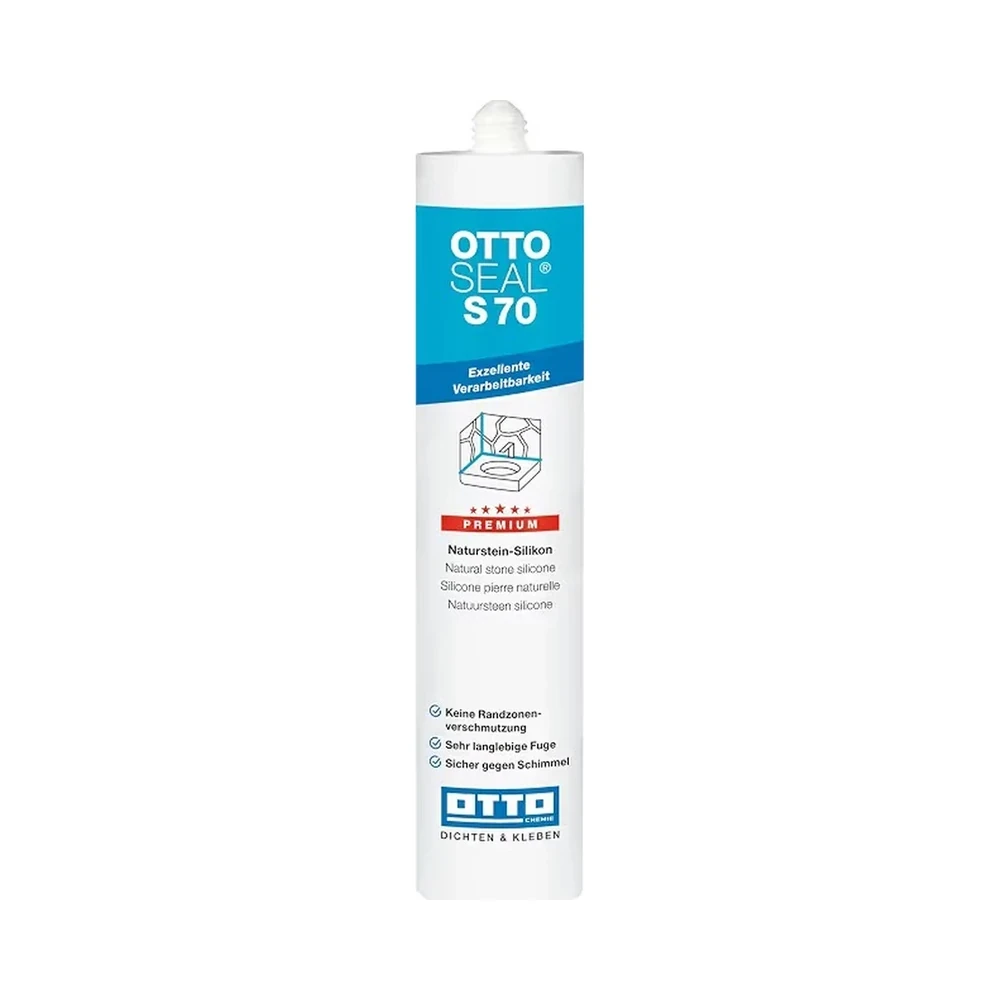
OTTOSEAL S70
For marble and natural stone — so the edge stays clean.
OTTOSEAL S70 Purchase link not available
-
Which sealant to use in the bathroom (and which not to)
Wet zone: sanitary silicone. Paintable ceiling: acrylic sealant. Stone: stone chemistry. Hybrid is not a shower wild card.
-
Sealing marble or natural stone: stop the greasy halo
Ordinary sanitary silicone can feed oil into porous stone. Neutral cure is not the same as a natural-stone grade.
-

Why silicone peels: adhesion, primers and a clean substrate
If the bead peels leaving the tile clean, it never bonded. Greasy household cleaners, damp faces and skipped primer are the usual reasons.