Movement joints: when silicone instead of grout
Corners, material changes, large fields and underfloor heating. Cement grout will not give.
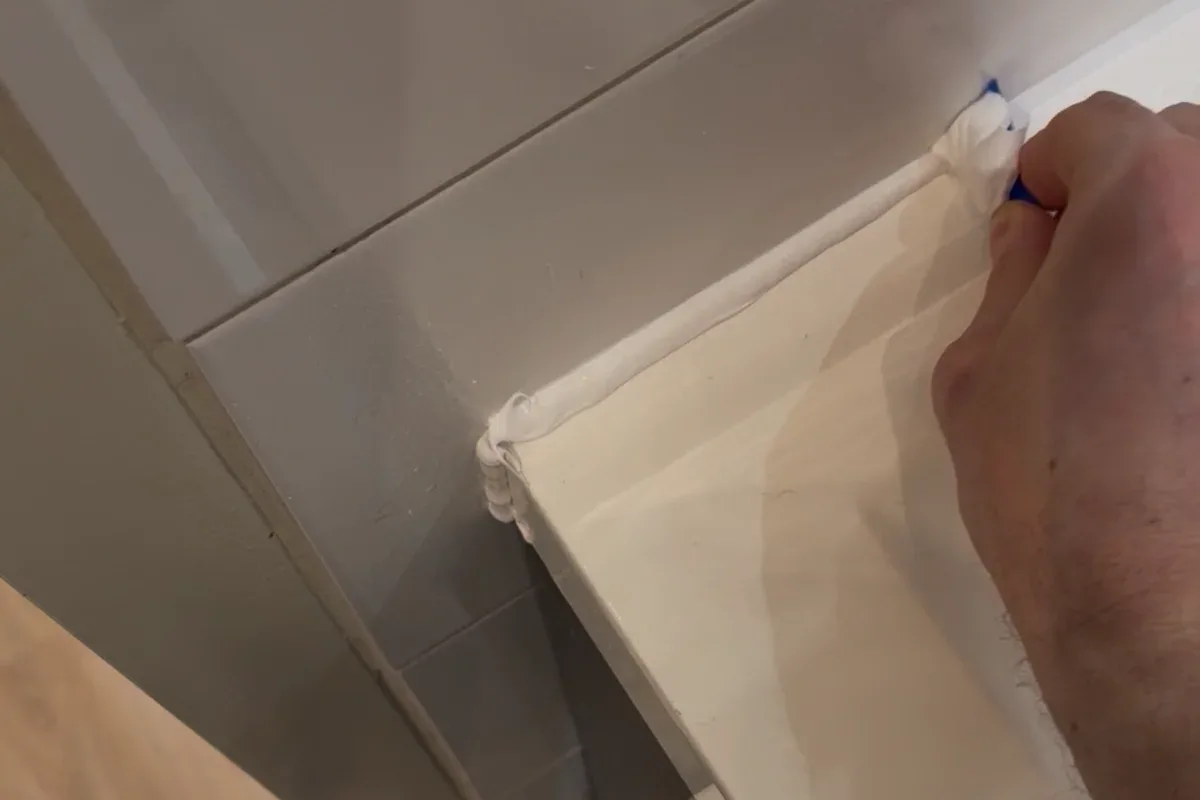
Corner and material change: elastic. Large fields or heating: intermediate joints. Centre of a stable field: grout. Silicone is not an industrial movement profile.
Tiling is not one rigid block
Floor and wall move with temperature, screed shrinkage and deflection of the slab. Cement grout has no elasticity. In a corner, or where tile meets a bath, tray, frame or a pipe, that grout splits. Then water gets in, and in the worst case the field tents.
That is elastic sealant, not more cement. In a shower I use OTTOSEAL S100; on natural stone, stone chemistry so the edge does not stain.
Where yes — and where not
Yes at internal corners: floor-to-wall and wall-to-wall.
Yes at material changes: tile against bath, tray, frame, penetrations.
Yes on large fields or with underfloor heating. In practice people talk about floors over about 25 m², or runs of 5–6 m, and about honouring movement joints already in the substrate. Those are trade orders of magnitude, not a magic stamp.
Not in the middle of a stable field on a rigid wall: that is grout (cement or epoxy).
Not as a stand-in for an industrial movement profile on a floor with heavy traffic. The profile does that job; silicone does not.
Backer rod, not a corner packed with adhesive
Packing the corner with tile adhesive and then “closing” it with silicone is three-sided adhesion. The mass sticks to both tiles and the hard back; it cannot stretch. Closed-cell PE backer rod, about 20–30 % wider than the gap: two faces.
A fatter bead does not replace width. A movement joint usually wants about 5 mm of width at a minimum, with matching depth.
If a floating screed has no perimeter isolation and is locked against the wall, the floor tents. Grinding only the edge and putting silicone in does not release that lock. Free the screed first.
How I do it
- Leave the corner and the movement joints clear of adhesive and grout, full depth.
- Vacuum. Degrease the flanks.
- Set the PE.
- Primer only if the substrate soaks hard.
- Neutral silicone or hybrid, from the bottom up, no voids.
- Tool it.
Do not smear a film of silicone over cracked grout. Do not use acrylic in a wet zone. Do not seal a corner with water trapped behind the tile.
Exceptions
Stone: stone silicone. Over a movement joint in the substrate, the elastic joint has to line up, not sit “nearby”.
What I use on this joint
-
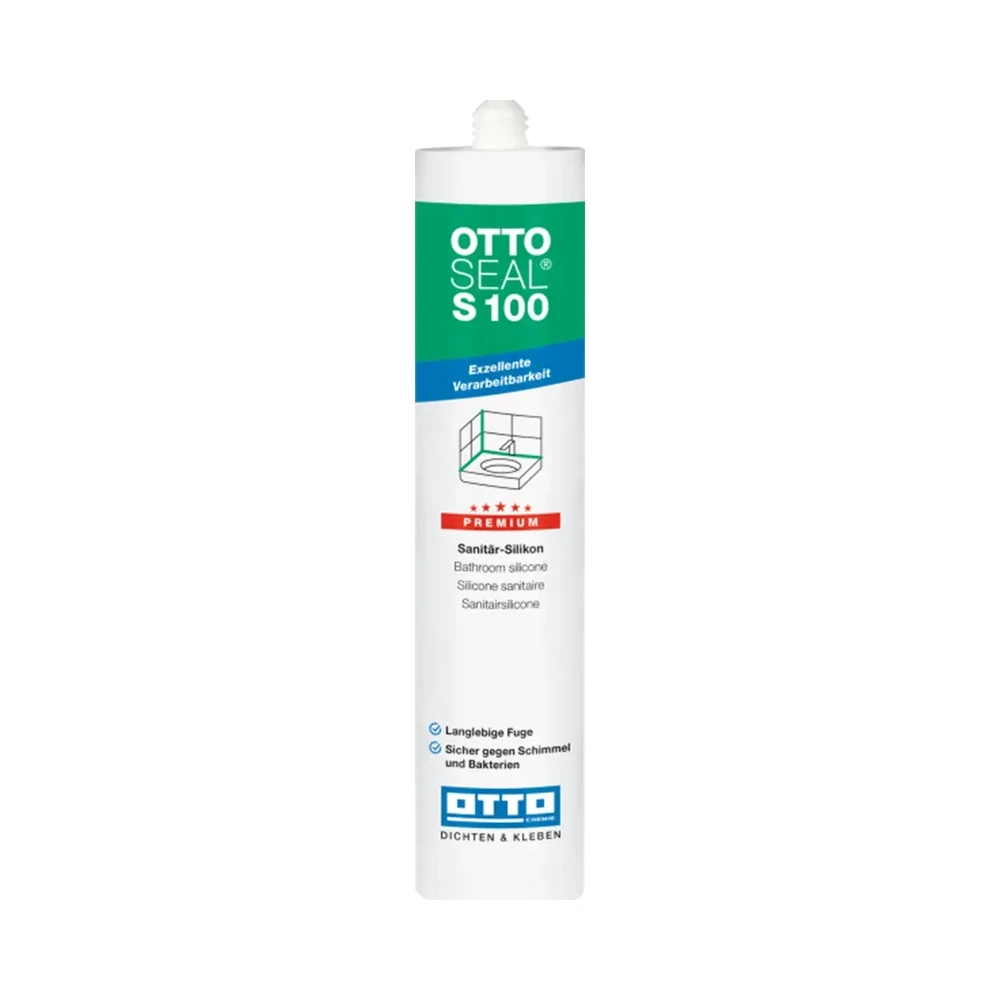
OTTOSEAL S100
The sanitary silicone I use on showers and baths. Elastic — not a staining-risk stone silicone.
OTTOSEAL S100 Purchase link not available -
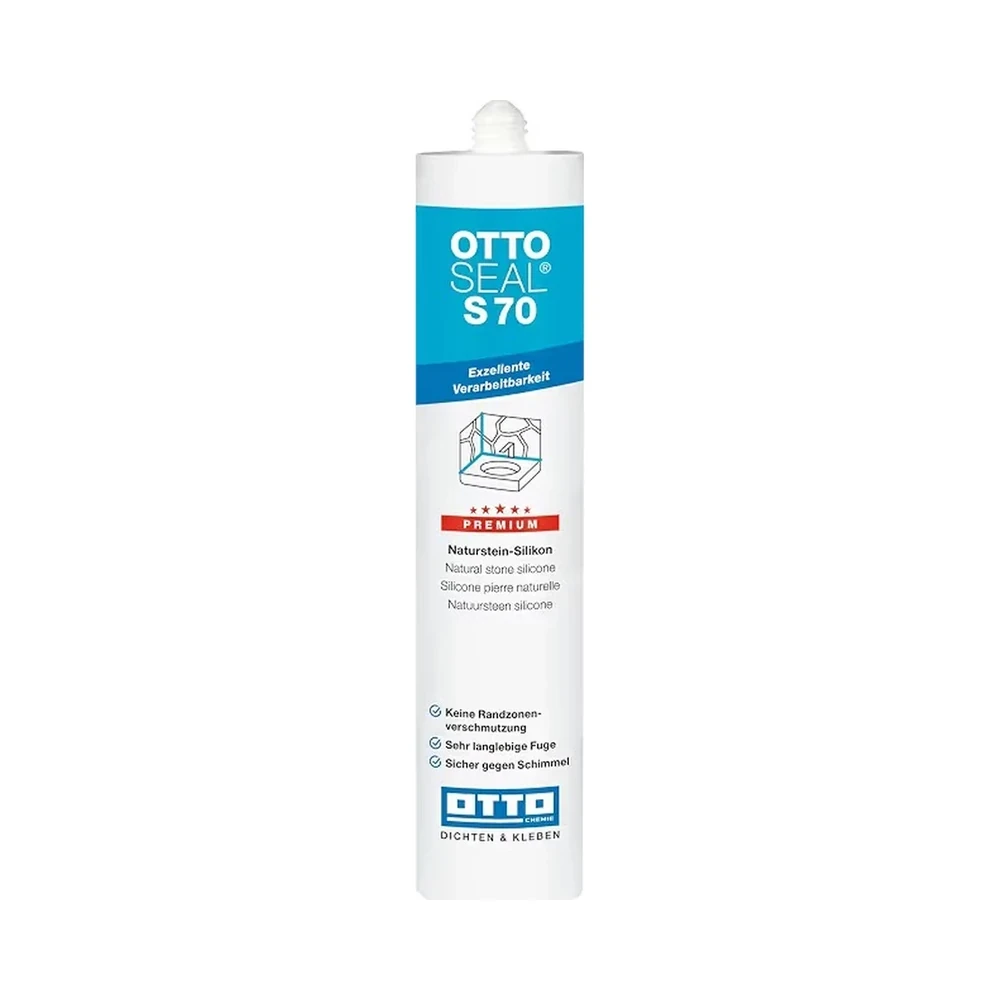
OTTOSEAL S70
For marble and natural stone — so the edge stays clean.
OTTOSEAL S70 Purchase link not available -
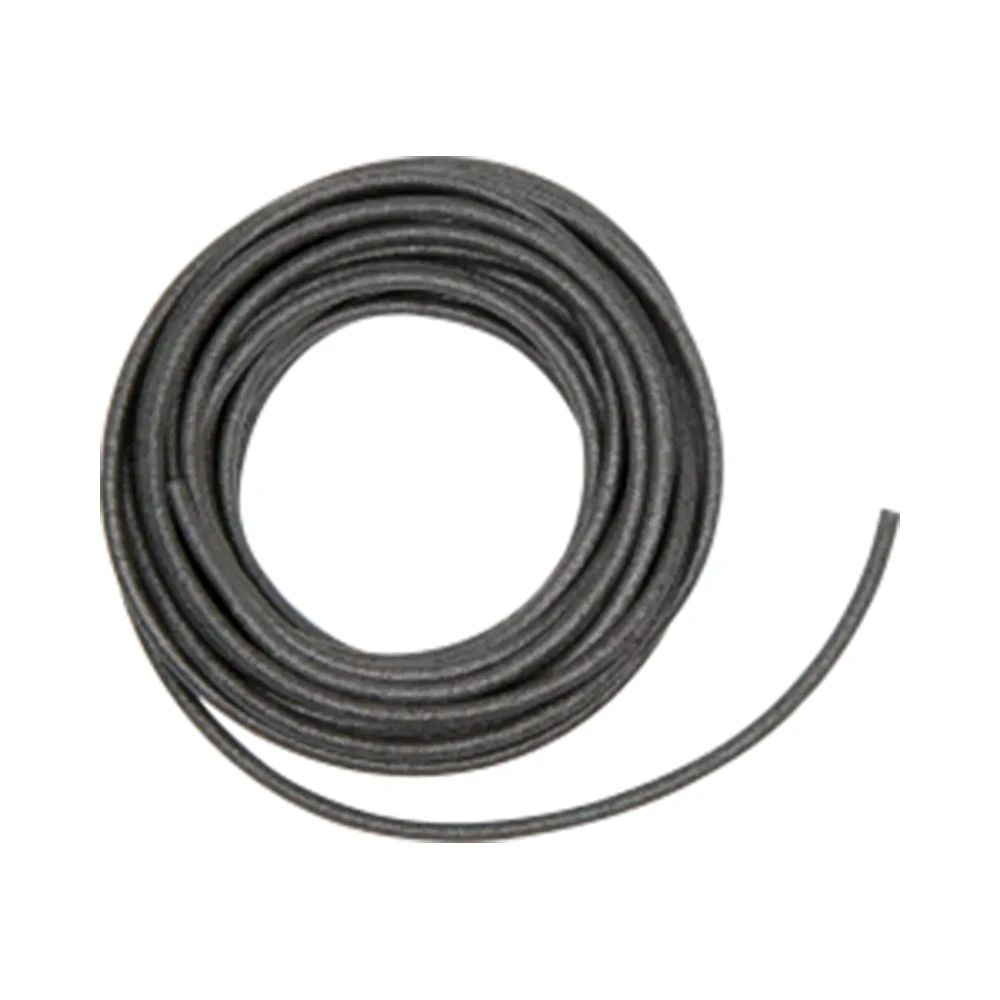
Backer rod
Closed-cell PE rod to control depth and prevent three-sided adhesion.
Backer rod Purchase link not available
-
Bathroom corners: grout or silicone
Wall-wall and wall-floor internal corners take an elastic joint. Cement grout cracks there; silicone does not replace the waterproofing band behind the tile.
-
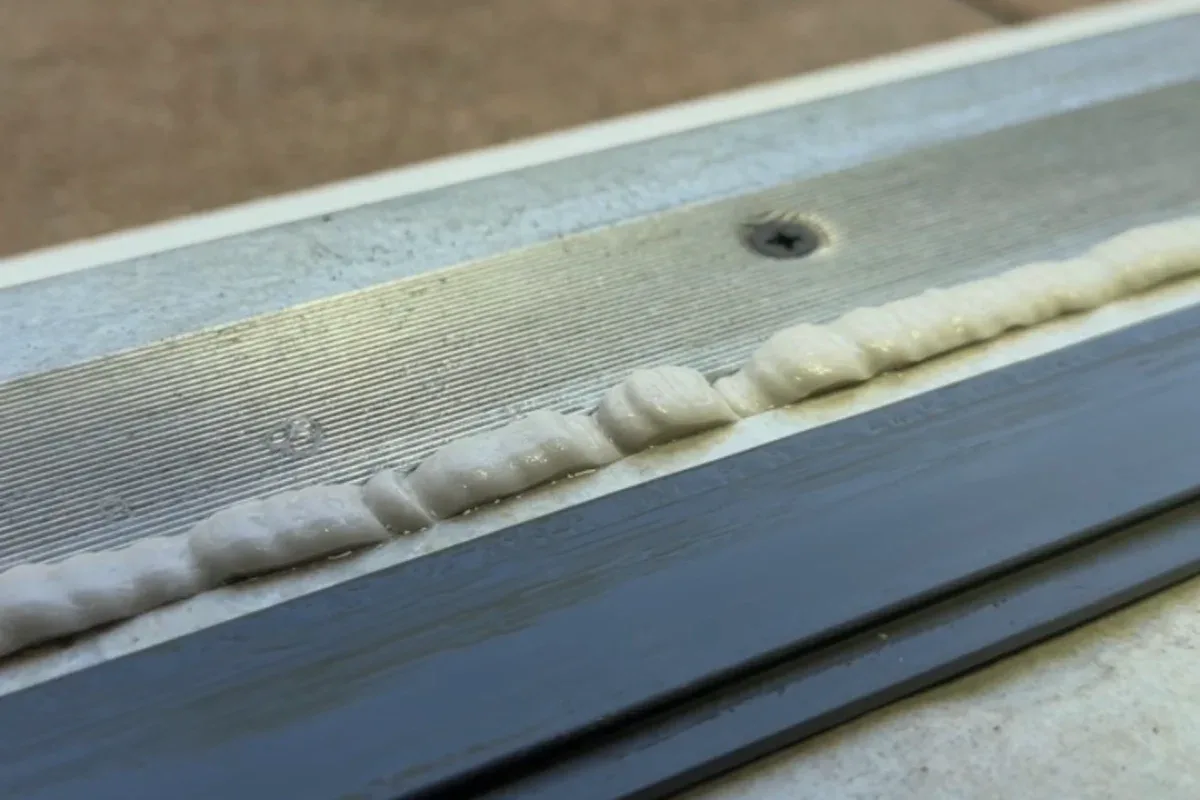
Underfloor heating: switch it off before you seal
If you seal an expanded slab, it pulls the joint as it cools; heat also skins the bead too soon.
-
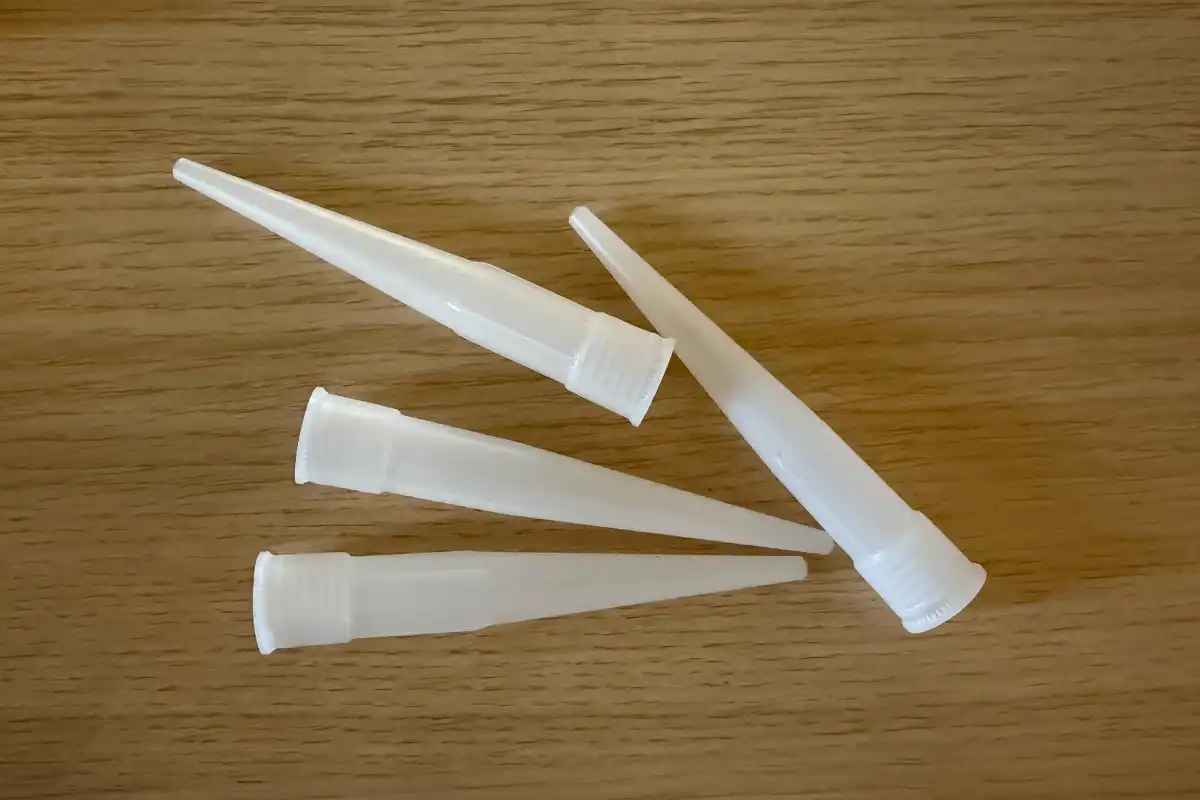
How wide a silicone joint can be
In a bathroom the useful range is usually 5–15 mm; under that there is no body, and beyond about 20 mm it is no longer a cartridge job.