
When you should not seal (yet)
A damp substrate, a loose tile or covered mould: silicone locks the problem in and vapour pushes the bead off.
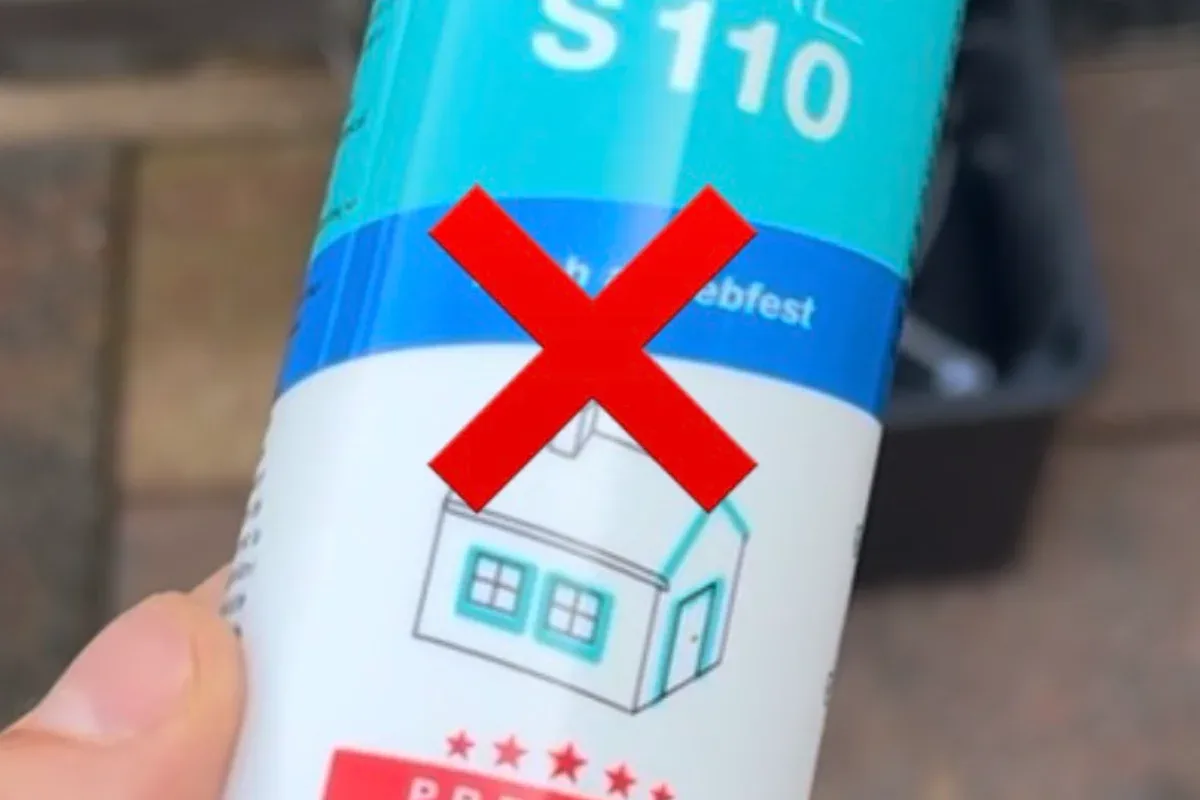
Do not seal over water, dust, grease, a bouncing tile or mould. Wait until it is dry and stable. Capping a leak is not waterproofing: fix the cause, then the joint.
Red light
Do not if the joint is dark or shiny with moisture. Silicone does not bond to water; it bonds to a film. When that water goes, the bead is already loose. You also trap vapour behind it: either it blows the joint, or it rots what you cannot see.
Do not if the tile, tray or frame moves when you push. Silicone follows thermal movement. It is not construction adhesive.
Do not if you have just tiled. 24–48 hours minimum for adhesive and grout; plaster or concrete can want longer. Clear film for 24 hours: condensation underneath means it is still wet.
Do not if you can see mould. Over the top is theatre. The colony eats outwards.
Do when the substrate is dry, degreased, dust-free and mechanically still.
Fix the cause, not the exit
If there is a leak, shut the water and find the inlet. Cutting the old bead out and leaving the meeting open lets it breathe. A dehumidifier helps; do not improvise a plug. Stabilise the tray or frame as its maker specifies — feet, screws, whatever the system is — then seal.
Emergency plastic or duct tape leaves glue in the pores. Silicone will not grab afterwards.
Paint, silicone and order
In a bathroom: tile and paint, silicone last. Silicone does not take paint. On glazing: often the seal first, then paint, and watch it: paint is less elastic than the joint under it. Fresh paint (a day or two) and silicone on top: plasticisers and a sticky mess.
Acrylic outdoors in the rain: it washes off before it cures. Outside, chemistry meant for outside.
Very new concrete is alkaline; a neutral grade sometimes wants primer. Movement bigger than that joint can take is not “filled”: the meeting has to be redesigned.
Exceptions
A wet-surface emergency paste is temporary and a pig to remove. Do not treat it as a finished joint. Over old silicone: never. Patience is a tool.
What I use on this joint
-
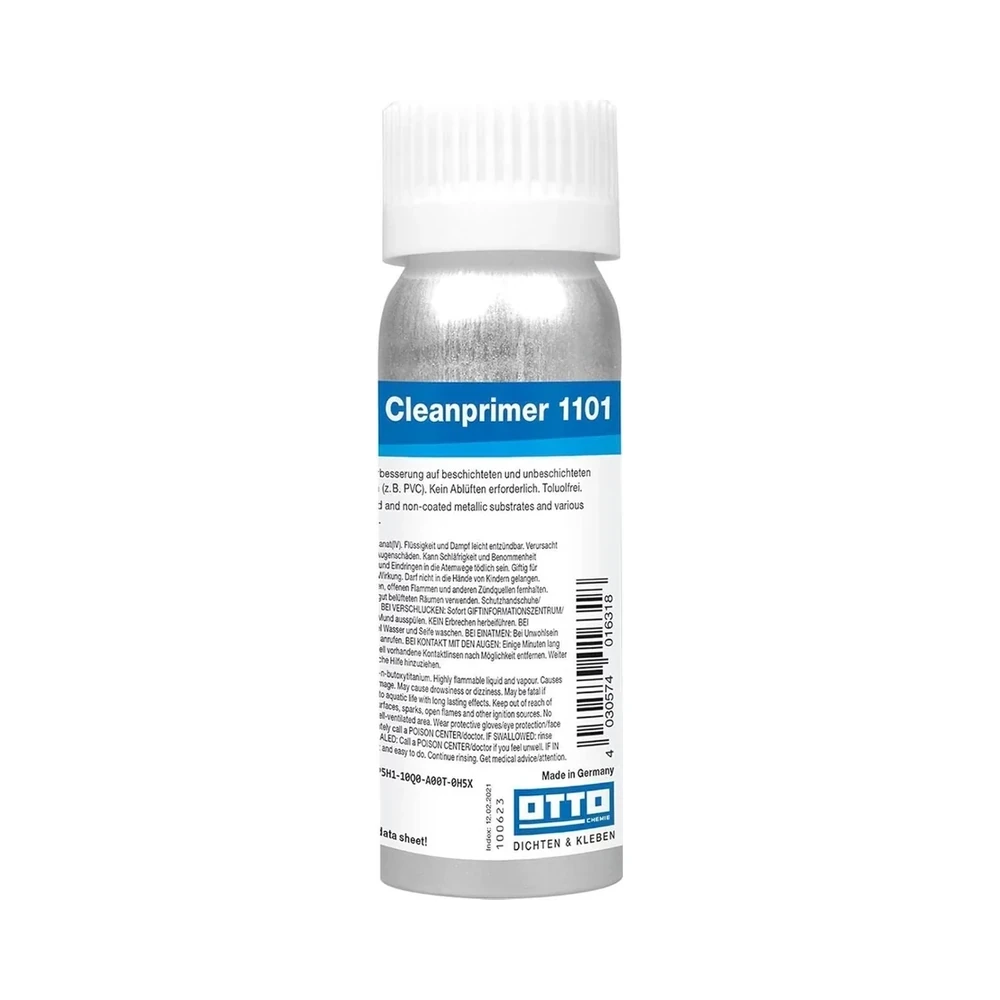
OTTO Cleaner / Cleanprimer
The technical cleaner I use to prep the substrate before sealing.
OTTO Cleaner / Cleanprimer Purchase link not available
-
Why silicone peels: adhesion, primers and a clean substrate
If the bead peels leaving the tile clean, it never bonded. Greasy household cleaners, damp faces and skipped primer are the usual reasons.
-
A shower tray that moves: sealant will not hold it still
An elastic joint is a seal, not a support. Stabilise the tray as its manufacturer specifies, then reseal.
-
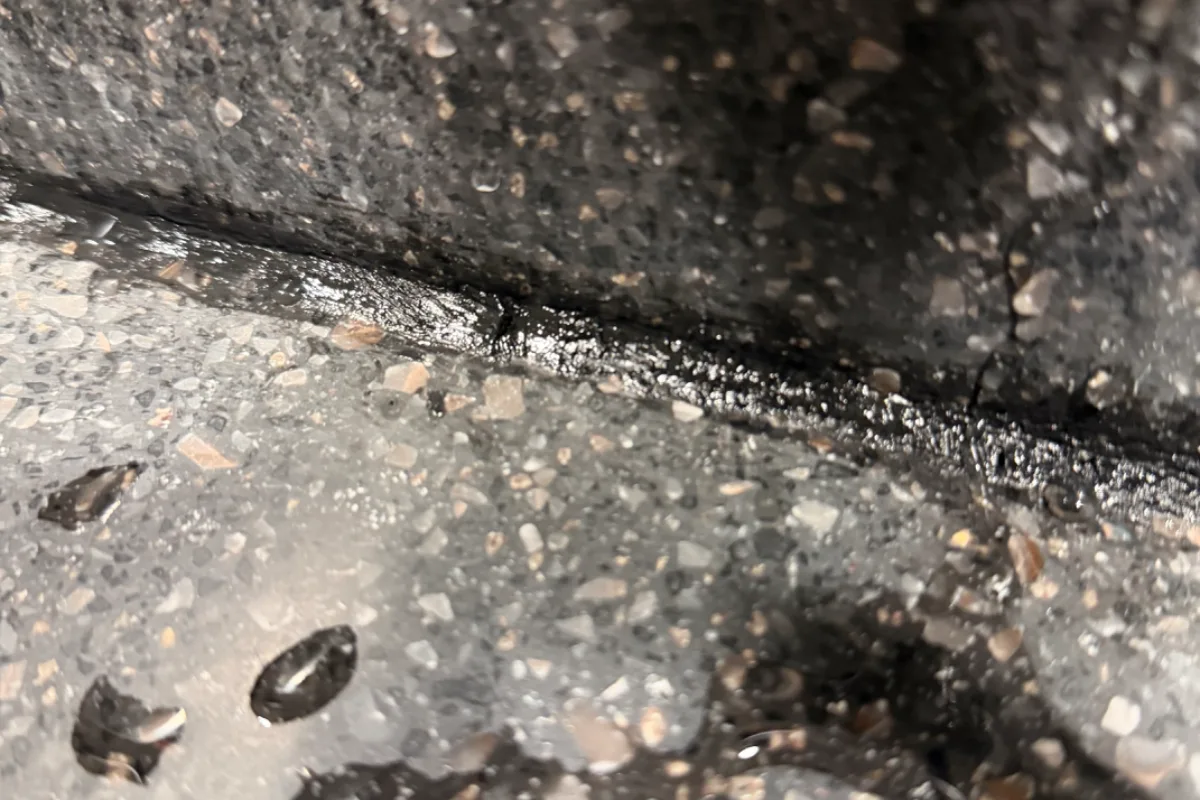
The silicone stays tacky: it is not “drying”
Silicone cures with moisture from the air; expired, cold, in a room that is too dry, or in a joint that is too deep, it stays paste.